Sierra Leonean Leone Ends 2025 as Second Weakest Currency in Africa


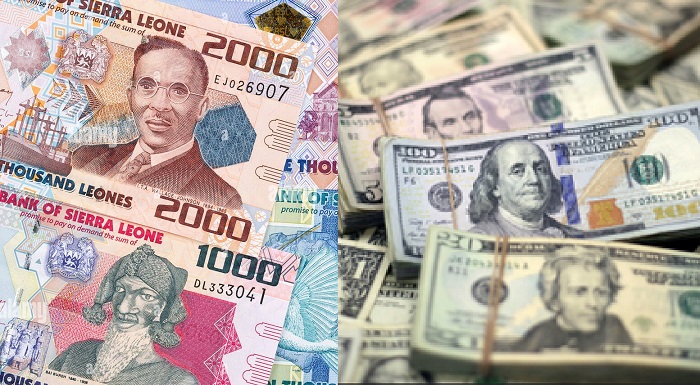
The Sierra Leonean Leone has concluded the year as the second weakest currency on the African continent, trading at nearly 21,000 to the United States dollar, according to year-end financial data released this week.

In a ranking of the ten African countries with the weakest currencies at the close of 2025, Sierra Leone placed second only to São Tomé & Príncipe. According to data cited from the Forbes Calculator, the Leone ended the year trading at 20,970 per US dollar.

This valuation places the Leone in a significantly more precarious position than regional peers.While São Tomé & Príncipe’s Dobra traded at 22,282 to the dollar, the gap between Sierra Leone and the third-ranked country, Guinea, is stark. The Guinean Franc ended the year trading at 8,741 to the dollar—less than half the exchange rate of the Leone.

For nations like Sierra Leone, such a depressed exchange rate frequently exacerbates daily hardships for citizens. The report notes that weak currencies tend to “increase inflation, deepen poverty, discourage investment, and impair a state’s ability to withstand shocks.”

While the report highlighted specific crises in South Sudan and Ethiopia regarding rapid depreciation and oil export reliance, the absolute value of the Leone against the dollar remains among the lowest on the continent. This devaluation makes imports significantly more expensive, hampering local businesses that struggle to plan or grow when operating costs fluctuate wildly.

The data reveals a challenging financial landscape for several East and West African nations. Following Sierra Leone, the top five weakest currencies were rounded out by the Guinean Franc, the Malagasy Ariary, and the Ugandan Shilling.

Top 5 Weakest African Currencies (End of 2025):

São Tomé & Príncipe Dobra: 22,282 per USD

Sierra Leonean Leone: 20,970 per USD

Guinean Franc: 8,741 per USD

Malagasy Ariary: 4,577 per USD

Ugandan Shilling: 3,610 per USD

As the country moves into 2026, the data suggests that stabilizing the Leone will be critical to restoring investor confidence and curbing inflationary pressures that affect the average Sierra Leonean household.


Source link

Afrikonet.sl – The Fastest and Most Secure Online Marketplace in Sierra Leone


In today’s world, buying and selling online is one of the fastest ways to do business. But in Sierra Leone, many people still face challenges when it comes to shopping or selling online. That is why Afrikonet.sl was created — to make online buying and selling easy, fast, and secure for everyone.

Breaking the Barriers of Online Business in Sierra Leone

For many years, business owners and customers have faced problems such as:

Lack of trust between buyers and sellers
Limited or unreliable payment methods
Late deliveries and fake products
Few platforms where vendors can showcase their goods to a wider audience

Afrikonet.sl was launched to solve these issues. Since its launch in May this year, over 2,000 people have already joined the platform. This shows how ready Sierra Leoneans are for a reliable online marketplace.

Safe and Flexible Payment Options

Afrikonet.sl provides a simple and secure payment system that works for everyone. Buyers can pay using:

Orange Money
Afrimoney
Debit Card
Payment on Delivery

This flexibility gives both vendors and customers confidence in every transaction.

A Local Team You Can Trust

Afrikonet.sl is not just a website — it has a physical office and a dedicated team of marketers in Sierra Leone. The local presence means vendors and buyers can get real support whenever they need it. The marketing team helps vendors set up their stores, promote their products, and reach more customers.

A Golden Opportunity for Young People

In this digital age, young people have the chance to make money from the comfort of their homes. Afrikonet.sl gives Sierra Leonean youth a simple way to open an online store, list their products, and start earning. Whether you sell clothes, gadgets, food, or local crafts, Afrikonet.sl helps you grow your business fast.

Why Choose Afrikonet.sl

Fast and secure online transactions
Multiple payment options
Local presence and support team

👥 Trusted by 500+ users since launch
🚀 Great opportunity for young entrepreneurs

Join Afrikonet.sl Today

If you are a vendor who wants to grow your business or a buyer searching for trusted products, Afrikonet.sl is the solution.

Visit www.afrikonet.sl to open your store today and start making money online.


Source link

Orange Sierra Leone Unveils 2024 CSR Report on Economic Growth and Community Transformation


Orange Sierra Leone has published its 2024 Corporate Social Responsibility (CSR) Report, highlighting major achievements in national development, digital advancement, environmental sustainability, and community well-being.

The report reflects the company’s continued commitment to supporting government priorities and improving lives through inclusive and responsible business practices.

Strong Economic Contribution and Local Empowerment

In 2024, Orange Sierra Leone contributed NLe781 million directly to the national economy through taxes, licenses, wages, and other statutory payments. The company also played a vital role in supporting Sierra Leonean businesses, generating NLe998 million in revenue for local suppliers across multiple sectors. This aligns with Orange’s strategy to prioritize local partnerships and strengthen domestic value chains.

Expanding Digital Inclusion Nationwide

A major highlight of the report is the expansion of digital access across the country. In 2024, 95% of the population was covered by 4G broadband, enabling more Sierra Leoneans to access online services, education, and business opportunities. To ensure network resilience and reduce carbon emissions, approximately 70% of Orange’s network sites are now solar-powered, reflecting the company’s investment in clean and sustainable energy.

Environmental Commitment Through Reforestation

Orange also advanced its environmental commitments, planting 10,000 trees in Kawase Hill, Moyamba District. This reforestation effort is aimed at restoring degraded land, protecting biodiversity, and supporting climate resilience in rural communities.

Youth Empowerment Through Skills and Innovation

The Orange Digital Center (ODC) continued to serve as a national hub for education, innovation, and entrepreneurship. In 2024 alone, the ODC trained over 14,500 young people in digital literacy, coding, entrepreneurship, and technology-based skills.

  • Women represented 47% of total trainees, reflecting the company’s drive toward gender inclusion.
  • 38% of beneficiaries secured job opportunities or started income-generating activities, demonstrating the centre’s impact on employability.

Community Impact Through the Orange Sierra Leone Foundation

Through its foundation, Orange impacted 14,627 beneficiaries across the country with programmes focused on education, health, women’s empowerment, youth development, and community resilience. Initiatives included scholarships, rural school support, digital education for girls, maternal health partnerships, breast cancer awareness, and emergency community support projects.

Driving a National Vision Through Responsible Business

The CSR Report emphasizes Orange Sierra Leone’s dedication to supporting the government’s development agenda especially in digitalization, youth employment, community health, and economic sustainability. The company reaffirmed its commitment to inclusive growth, responsible technology use, and environmental stewardship.

In CEO Sekou Amadou Bah’s statement accompanying the report, he noted, “Our CSR ambition is a direct reflection of our brand values: Care, Bold, and Responsible. It speaks powerfully to our renewed brand message: Orange is Here! This presence goes beyond the physical it symbolizes our unwavering dedication to improving the lives of Sierra Leoneans in meaningful and sustainable ways.”

Orange Sierra Leone noted that its achievements are the result of collective effort across staff, partners, customers, and communities, and reaffirmed its dedication to making technology a force for positive change.

To access the Full Report, Scan the QR Code below or visit the company’s official website: https://www.orange.sl/en/csrannualreport-2024.html

With its ambitious goals and growing impact, Orange Sierra Leone continues to position itself not only as a leader in connectivity and innovation but also as a driving force for national transformation.


Source link

Afrimoney and Ecobank Launch Sierra Leone’s First Mobile Money POS Payment System


Afrimoney and Ecobank Sierra Leone have launched a strategic partnership that enables customers to make payments directly from their Afrimoney mobile wallets on Ecobank Point-of-Sale (POS) terminals.

The historic initiative was officially unveiled at Ecobank’s Head Office in Freetown.

This innovation marks the first time in Sierra Leone that mobile money users can make direct payments on POS devices an advancement expected to greatly enhance digital financial accessibility for both consumers and merchants nationwide.

Kate Thompson, Head of Consumer Banking at Ecobank Sierra Leone, described the partnership as a “significant milestone” in connecting banking and mobile money ecosystems.

She explained that while only about 29% of Sierra Leoneans have bank accounts, around 30% use mobile money wallets two customer bases that are now linked through this collaboration. “Before this innovation, only cardholders could use POS machines. Now, Afrimoney wallet holders can make payments instantly and securely on Ecobank POS devices, without needing a bank account,” Thompson stated. She added that the initiative simplifies everyday transactions from school fees to market purchases empowering merchants and customers alike.

Calling the development “financial inclusion in its purest form,” Thompson noted that the new service will help bridge the gap between the formal banking sector and mobile money users, making digital transactions more convenient and accessible.

Afrimoney CEO, Martison Obeng-Agyei, praised the collaboration as a “forward-looking example of technology serving the public,” highlighting that it is the first of its kind in Sierra Leone’s financial landscape. He revealed that the next phase of the partnership will extend the service to Ecobank ATMs, allowing customers to withdraw cash directly from their Afrimoney wallets.

“This initiative simplifies payments, ensures instant settlements, and enhances business efficiency,” Obeng-Agyei said. “Once a payment is made on an Ecobank POS, the funds are instantly available in the merchant’s bank account eliminating the hassle of cashing out or re-depositing money.” He added that the system was developed with long-term reliability and quality in mind, signaling more innovations ahead in 2026.

Ecobank Sierra Leone Managing Director, Sebastian Ashong Katai, described the partnership as a deliberate strategy rooted in collaboration rather than competition. He said Afrimoney’s robust technology and extensive subscriber base made it an ideal partner for achieving shared financial inclusion goals. “Convenience and accessibility are the true measures of banking success,” Katai noted. “Money alone doesn’t create access unless people have the freedom to use it. By enabling mobile wallet payments on POS devices, we’re expanding that freedom and empowering Sierra Leoneans to transact anywhere.”

He further linked the initiative to the Bank of Sierra Leone’s National Payment Switch, emphasizing that progress in the financial sector depends on collaboration and interoperability among players.

The Afrimoney Ecobank partnership stands as a major step toward bridging traditional banking and mobile money ecosystems. It offers Sierra Leoneans a secure, convenient, and inclusive way to conduct transactions supporting the Central Bank’s vision of a digitally connected and financially empowered nation.

With this launch, customers can now use their Afrimoney wallets across Ecobank’s nationwide POS network ushering in a new era of digital convenience and financial empowerment for businesses and consumers across Sierra Leone.


Source link

Sierra Leone Urged to Tap Dimension Stone Industry as Global Market Climbs US$7.02 Billion by 2026


Stakeholders in Sierra Leone’s extractive sector have called for greater attention to the country’s dimension stone resources, amid projections that the global market will rise from about US$5.74 billion in 2023 to US$7.02 billion by 2026.

Long-term estimates suggest the industry could reach US$20 billion, driven by increasing demand for construction and modern infrastructure.

Dimension stones, which include natural rocks such as granite, marble, limestone, and sandstone cut into blocks or slabs, are widely used in roads, ports, railways, and housing projects.

Despite their durability and strong market value, the materials remain significantly underutilised in Sierra Leone when compared with diamonds, gold, and bauxite.

These issues were highlighted during a Civic Engagement Forum convened by the African Centre for Climate Change on “Strengthening Accountability and Transparency in Sierra Leone’s Extractive Sector: Empowering Civil Society to Leverage Public Contract Disclosures for Monitoring and Illicit Financial Flows (IFFs) Reduction.”

The event focused on the economic potential of dimension stones and the need for stronger governance in the sector.

Speaking at the forum, Engineer Hadji Dabo, Director General of the National Minerals Agency (NMA), said the dimension stone industry holds significant promise but faces serious challenges. He pointed to child labour, unsafe artisanal mining, gender inequality, and widespread non-compliance as ongoing concerns.

“Many companies secure quarry licenses but later exploit dimension stones illegally,” Dabo warned, noting that weak oversight has led to revenue losses and environmental damage.

He recalled previous government bans on timber harvesting and stone extraction but said these measures failed to ensure long-term regulatory control. “The seriousness of the issue has compelled the government to establish an institution dedicated to supervising extraction and exportation to enhance transparency,” he said.

Dr. Charles G. Ofori, Policy Lead for Climate Change and Energy Transition at the Africa Centre for Energy Policy (ACEP), urged Sierra Leone not to overlook minerals classified as “small” or of lower commercial value.

“With accurate data we can calculate royalties, reduce leakages, and strengthen accountability. If Sierra Leone takes dimension-stone extraction seriously, it could contribute significantly to GDP,” he stressed.

Participants concluded the discussions with calls for stronger regulatory frameworks, accessible data, and effective taxation. They agreed that if managed responsibly, dimension stones could become a key driver of Sierra Leone’s economic growth and an important addition to the country’s broader extractive portfolio.


Source link

Sierra Bottling Group Acquires Majority Shares in Sierra Leone Brewery Limited


Sierra Leone Brewery Limited (SLBL) has announced the completion of a major milestone in its business development with the acquisition of 98.07% majority shareholding by Sierra Bottling Group (SBG).

The acquisition notably marks a bold step towards strengthening the brewery’s long-term sustainability and modernizing its operations.

The transition, which officially took effect on December 1, 2025, sets the stage for a renewed focus on innovation, improved product quality, and expanded contribution to Sierra Leone’s industrial output.

In a statement released by the company, SBG emphasized its commitment to enhancing operations, boosting local development, and driving economic growth within the country.

“We are pleased to announce that Sierra Bottling Group has completed the acquisition of a 98.07% majority shareholding of Sierra Leone Brewery Limited,” the statement reads. “This milestone marks a bold step toward strengthening our long-term sustainability, modernizing our operations, and expanding our contribution to the growth of the industrial output of Sierra Leone.”

With the new leadership in place, SBG has already begun implementing full operational control, ensuring the brewery’s continued growth and enhanced focus on innovation and community impact.

As part of the transition, SBG has integrated new systems, reinforced organizational structures, and placed renewed emphasis on employee growth.

“Our commitment remains the same: delivering quality products, supporting local development, and investing in the future of Sierra Leone,” the statement continued, reaffirming the company’s focus on maintaining high standards for both product quality and community engagement.

The management of SBG expressed confidence that the acquisition will open doors for new possibilities, not only for Sierra Leone Brewery but also for its employees, partners, and loyal consumers.


Source link

Union Trust Bank Shareholders Challenges Bank of Sierra Leone Over RCBank Takeover


Shareholders of Union Trust Bank (UTB) have formally petitioned the Bank of Sierra Leone (BSL), requesting an immediate suspension of the central bank’s decision to place UTB under a caretaker management and approve Rokel Commercial Bank (RCB) as its acquirer.

The petition, filed by ACE Legal Partners on behalf of major UTB shareholders and consultant Dr. Jonathan Bangura, alleges significant statutory and constitutional violations in the process that led to the decision.

The petition was submitted in response to BSL’s public notice on December 8, 2025, which declared that UTB would be placed under caretaker management and that RCB would take over the bank.

According to the petitioners, the central bank’s actions contravene the Banking Act, 2019, particularly Section 69, which mandates a 45-day period for UTB to submit a capital restoration plan. They claim that BSL shortened this statutory period to just 30 days, disregarding the required timeframe.

In the petition, which is addressed to the Governor of the Bank of Sierra Leone, the shareholders argue that BSL’s letter of November 14, 2025, directed UTB to submit its capital restoration plan within 30 days. However, they assert that this period was inadequate, as it fell short of the 45 days required under the Banking Act.

The petition also highlights that the central bank failed to honor even the shortened 30-day period. According to the petitioners, the letter, received on November 18, 2025, set a deadline of December 18, 2025, for the submission. However, the resolution date in the BSL’s public notice was approximately 20 days later, in violation of both statutory and constitutional principles.

The petitioners claim that this deviation from the Banking Act not only constitutes a statutory breach but also amounts to a constitutional illegality. Citing Section 105 and Section 171(15) of the Sierra Leone Constitution, they argue that any law inconsistent with the constitution is void and of no effect. As such, the petitioners contend that BSL’s actions, which diverged from the Banking Act, are unconstitutional.

ACE Legal Partners, representing the shareholders, state that they act on behalf of several prominent UTB stakeholders, including Messrs. Sabanor Trust Investment Fund, Aureol Insurance Company, Mr. Mohamed Kwanza, Mr. Yayah Nesser, Ms. Yema Woobay, and Mr. Wusu B. Koroma. Additionally, they represent Dr. Jonathan Bangura, UTB’s consultant and the individual entrusted by the late founder and CEO of UTB, Mr. Sanpha Koroma, to oversee the bank’s succession and fiduciary transition.

The petitioners have outlined three primary requests in their letter to the Bank Governor. First, they call for an immediate suspension of the BSL’s December 8 public notice, asking that all receivership, resolution, and acquisition processes be put on hold pending a transparent and good-faith review.

Second, they demand an urgent meeting involving Dr. Bangura, key UTB stakeholders, the Director of Banking Supervision, and other senior BSL officials to engage substantively on the proposed roadmap for the bank’s future. Finally, they seek approval from the central bank to proceed with UTB’s recapitalization and restructuring plan, which they assert should be carried out under BSL’s direct supervisory oversight.

In support of their position, the petitioners reference several provisions of the Banking Act, 2019, including Sections 116(1), 59, 66, 67, and 69. They also invoke constitutional principles of “fair administrative actions” and common law doctrines such as “legality, reasonableness, proportionality, and procedural fairness.”

The petitioners have expressed their hope that the Bank Governor will give “kind consideration” to their requests and allow for a swift and transparent review of their proposed recapitalization plan under the supervision of BSL. As of the time of writing, the Bank of Sierra Leone has not publicly responded to the petition.

The petitioners argue that the statutory instruments regulating public entities, such as the Bank of Sierra Leone, have quasi-constitutional effect, as they define the scope of executive discretion. They conclude that any deviation from the Banking Act would constitute not just a statutory breach, but a constitutional illegality, with far-reaching consequences for the integrity of the country’s financial system.


Source link

Sierra Leone Commercial Bank Signs Strategic Partnership With Republic Bank Ghana


Sierra Leone Commercial Bank (SLCB) has taken a significant step toward regional integration and institutional strengthening by signing a technical cooperation agreement with Republic Bank Ghana.

This strategic partnership aims to enhance SLCB’s operational capacity and accelerate its transformation into a modern, innovation-led financial institution within West Africa.

More than just a ceremonial accord, the agreement signifies a commitment to deep technical collaboration, focusing on knowledge exchange, capacity building, and the enhancement of expertise. These elements are core to SLCB’s long-term vision of becoming a resilient bank that meets diverse financial needs across the region.

The official signing ceremony took place in Accra, Ghana, and featured key leadership figures from both banks. Republic Bank Ghana was represented by its Managing Director, Board Chairman, and other senior executives, while SLCB’s delegation included its Board Chairman, Managing Director, Director of Finance, and Head of the Company Secretariat, highlighting the strategic importance of the partnership.

Through this alliance, SLCB aims to leverage Republic Bank Ghana’s extensive experience and technical knowledge to drive excellence in service delivery, digital transformation, and sustainable banking practices. The collaboration is expected to lead to improved product offerings, more efficient systems, and greater customer satisfaction within Sierra Leone’s banking sector.

Both banks reaffirmed their shared vision of promoting higher standards in regional banking. The partnership is anticipated to yield mutual benefits, strengthening institutional performance and contributing to broader economic development in both Sierra Leone and Ghana.

This technical cooperation marks a pivotal moment in SLCB’s growth journey, signaling its readiness to embrace regional opportunities and deliver lasting value to customers, employees, shareholders, and the financial ecosystem at large.


Source link

Bank of Sierra Leone Announces Reduction in Monetary Policy Rate to Boost Economic Growth


The Monetary Policy Committee (MPC) of the Bank of Sierra Leone (BSL) has reduced the Monetary Policy Rate (MPR) by 1 percentage point to 23.75%, effective June 24, 2025, in a move aimed at lowering borrowing costs and stimulating private sector investment.

The decision, approved by the BSL Board of Directors on June 23, follows a review of global and domestic economic conditions. Governor Dr. Ibrahim L. Stevens announced corresponding adjustments to the Standing Lending Facility Rate (SLFR) and Standing Deposit Facility Rate (SDFR), now set at 26.75% and 17.25%, respectively.

The MPC’s decision comes amid a cautiously optimistic outlook for Sierra Leone’s economy, underpinned by a significant decline in domestic inflation from 13.78% in December 2024 to 7.55% in May 2025. This drop, attributed to prudent monetary policies, fiscal discipline, stable fuel prices, and a relatively steady exchange rate, has created room for the BSL to ease monetary policy to support investment and growth.

Globally, the economic landscape remains challenging, with the International Monetary Fund (IMF), the Organisation for Economic Co-operation and Development (OECD), and the World Bank revising down their 2025 global growth forecasts to 2.8%, 2.9%, and 2.3%, respectively. These downgrades reflect trade policy shifts and geopolitical tensions, which could disrupt supply chains and exert inflationary pressures on Sierra Leone’s economy. Despite these risks, the MPC noted that global inflation is expected to decline in 2025 and 2026 due to tighter monetary policies and falling commodity prices.

Domestically, Sierra Leone’s economy is projected to grow by 4.5% in 2025, up from 4.0% in 2024, driven by strong performances in mining, agriculture, and services. The MPC anticipates growth to rise further to 4.7% in 2026 and 2027, supported by government initiatives to enhance agricultural productivity. However, external risks such as global supply chain disruptions and trade tensions could pose challenges, prompting calls for policies to bolster economic resilience.

The MPC highlighted mixed developments in Sierra Leone’s external and fiscal sectors. The trade deficit widened in the first quarter of 2025 due to higher import costs and lower export earnings, while foreign exchange reserves fell to cover just 1.8 months of imports. On the fiscal front, the budget deficit grew in early 2025 due to lower domestic revenue and higher interest payments, though reduced spending on goods, services, and subsidies narrowed the primary deficit. A decline in the 364-day Treasury Bill rate has eased borrowing costs, providing fiscal space for the government.

Monetary developments showed a contraction in reserve money but moderate growth in broad money (M2) in the first quarter. While credit to the private sector increased, it remains insufficient to drive significant investment. The MPC stressed the need for a more inclusive credit environment to support private sector growth.

In its statement, the MPC emphasised that the rate cut aims to encourage private sector credit, reduce borrowing costs, and promote sustainable growth while maintaining vigilance over inflationary risks. The next MPC meeting is scheduled for 25 September 2025.


Source link

Sierra Leone and Seven Other West African Countries in Malaysia to Unveil the Truth About QNET


QNET, a 26-year-old international direct selling company with operations in about 100 countries including Sierra Leone has invited journalists from seven West African countries to visit its Head Office in Malaysia and attend this year’s VCON, a global gathering of QNET’s independent distributors, marketing experts, entrepreneurs, and other stakeholders.

Among the journalists invited from QNET’s sub-Saharan Africa operations were senior reporters and editors from Ghana, Nigeria, Togo, Senegal, Guinea, Liberia, and Sierra Leone. The Editor of Sierraloaded represented Sierra Leone.

As part of a tradition it began in 2022, QNET annually invites journalists from various countries to its headquarters to witness first-hand its operations and attend the company’s flagship conference, VCON, in Malaysia. This is part of its continued efforts to counter misinformation and build transparency around its brand and products.

In recent years, QNET has faced widespread misconceptions, as scammers have falsely used the company’s name to defraud people. In response, QNET has increased public education through press statements, media engagement events, and partnerships with security and government agencies particularly in Sierra Leone. It has also launched a robust anti-fraud initiative called “QNET Against Scams,” aimed at offering clear, factual information about the company and its offerings.

As part of the media tour, West African journalists visited QNET’s 15-storey headquarters, the QI Tower a towering and modern facility that visibly reinforces the company’s legitimacy and global reach. They also toured the QNET product gallery, where they could see and experience the lifestyle and wellness products the company manufactures for customers in Sierra Leone, Africa, and beyond.

Journalists participated in presentations detailing QNET’s business structure, philosophy, model, and product lines. During these sessions, it was made evident that QNET is a long-established company with a genuine presence and commitment to African markets. The media team was also introduced to the RYTHM Foundation (Raise Yourself To Help Mankind), the company’s corporate social responsibility arm, which supports impactful humanitarian projects worldwide.

Day One of the tour emphasized QNET’s operations in Africa especially Sierra Leone where fraudulent individuals have used the company’s name to exploit innocent people. QNET made it clear that it has no association with such individuals and is actively working to combat scams and misinformation. Inviting journalists from several African countries is one way QNET aims to increase transparency and correct public misconceptions.

During the sessions, QNET repeatedly clarified the following:

It does not offer job opportunities abroad or require large payments in exchange for employment.

It does not offer scholarships or visa services.

QNET is not a Ponzi scheme or an investment platform.

Anyone spreading such false claims should be reported to security agencies or directly to QNET via its WhatsApp hotline: +233 256 630 005.

VCON 2025 officially opens on June 21, 2025, on the beautiful island of Penang, Malaysia, with over 8,000 participants expected from around the world.


Source link