Former Union Trust Bank Executive Director Claims Unfair Treatment by Central Bank


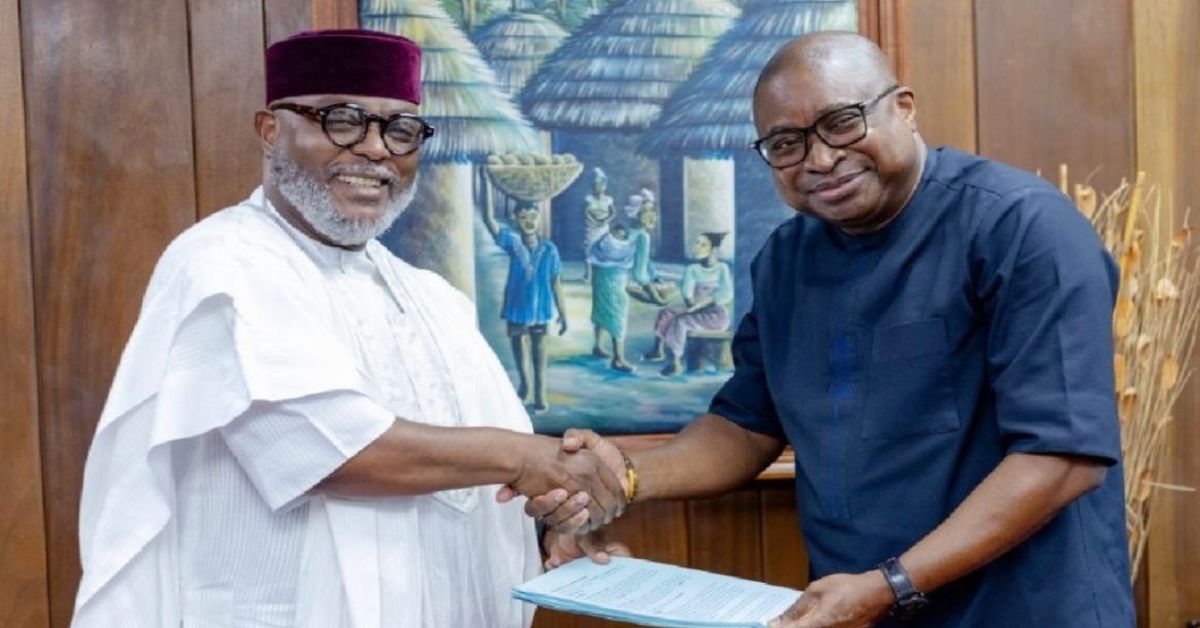
The former Executive Director of Union Trust Bank (UTB),Wusu Bai Koroma, claimed that the Bank of Sierra Leone treated them unfairly when their bank was liquidated. Koroma made this claim during an interview with Ecko Media.

The former Executive Director expressed deep disappointment over the closure, asserting that the indigenous financial institution was “unfairly treated” despite emerging from a prolonged period of financial distress and attracting viable recapitalisation offers.

During the interview, Koroma stressed UTB’s unique position in the nation’s financial sector as the only fully indigenous bank in Sierra Leone.

“We were the only indigenous bank in Sierra Leone, meaning we were the only bank owned and managed by Sierra Leoneans,” Koroma stated, noting that the bank’s stakeholders comprised both local corporate entities and individual Sierra Leonean citizens.

When questioned about why these shareholders failed to mobilise a bailout package before the Central Bank intervened, Koroma clarified that while they could not coordinate in time, internal conflict was not the cause. Instead, he pointed to a challenging six-year period of financial losses that had severely dampened investor confidence.

According to the former Executive Director, the bank’s leadership had recently managed to reverse its fortunes through rigorous restructuring.

“We took some prudent measures, we made a lot of sacrifices for the six years we were making losses,” Koroma explained. “But we turned things around.”

He noted that as the bank returned to profitability, interest from potential investors surged. In the months leading up to the liquidation, UTB reportedly received multiple financial injection offers from both domestic and international corporate entities and private investors.

Koroma revealed that UTB had forwarded concrete investment proposals to the Central Bank aimed at meeting the required minimum capital threshold. However, he claimed these submissions were entirely ignored by the regulator.

“We had proposals that we sent to the Central Bank. They were not responded to, they were neither acknowledged… they were never even addressed,” Koroma said, adding that the Central Bank failed to engage with the interested investors to review their terms.

When asked how he felt seeing the institution slip away, Koroma did not mince words: “Unfairly treated. As a Sierra Leonean, as a Sierra Leonean business, unfairly treated.”

The Bank of Sierra Leone has maintained that its actions against non-compliant financial institutions are strictly regulatory measures intended to protect depositors and maintain the stability of the country’s financial system.


Source link

Bank of Sierra Leone Raises Monetary Policy Rate to 17% Over Rising Inflation


The Bank of Sierra Leone has increased its Monetary Policy Rate (MPR) by 0.25 percentage points to 17.0 percent, citing rising inflationary pressures and heightened global uncertainty driven by geopolitical tensions in the Middle East.

The decision, reached by the Monetary Policy Committee (MPC) at its meeting on 12 June 2026 and approved by the Bank’s Board of Directors on 15 June, took effect on 17 June 2026. The Standing Lending Facility Rate and Standing Deposit Facility Rate were also adjusted upwards to 21.0 percent and 11.5 percent, respectively.

Governor Dr. Ibrahim L. Stevens chaired the MPC meeting, where members reviewed recent global and domestic macroeconomic developments and assessed risks to inflation and growth.

The Committee noted that the global economic outlook has become increasingly uncertain, largely due to geopolitical tensions in the Middle East. The disruption of energy supply routes, particularly the closure of the Strait of Hormuz, has adversely affected global energy markets, increased shipping costs, and weakened investor confidence.

The International Monetary Fund, in its April 2026 World Economic Outlook, revised global growth projections downward to 3.1 percent for 2026, from 3.3 percent projected in January. Inflationary pressures have intensified globally, driven by rising crude oil prices, higher food costs, and elevated transportation costs.

Headline inflation in Sierra Leone has continued its upward trajectory since the first quarter of 2026, increasing from 8.05 percent in February to 10.24 percent in March and 10.83 percent in April. The Committee attributed this to pass-through effects from higher global oil prices and tax measures introduced under the Finance Act 2026.

The MPC assessed that risks to the inflation outlook remain tilted to the upside, particularly amid persistent external cost pressures.

Domestic economic activity is expected to moderate, with real GDP growth projected at 4.0 percent in 2026, down from 5.0 percent in 2025. The moderation reflects the adverse impact of disruptions in global energy markets and their transmission to domestic production through higher input costs and supply constraints.

The Bank’s high-frequency Composite Index of Economic Activities indicated a decline in economic activity in the first quarter of 2026 relative to the previous quarter. However, a gradual recovery is expected, supported by the Feed Salone Programme and other pro-growth government initiatives.

External sector performance improved in the first quarter, with a reduction in the trade deficit driven by significantly lower import bills. Gross international reserves declined but remain adequate to cover approximately 2.1 months of imports of goods and services. The exchange rate remained broadly stable.

The overall fiscal deficit widened in the first quarter of 2026 compared to the same period in 2025, largely due to lower government revenue and a slight increase in expenditure. However, the primary balance recorded a surplus, supported by efforts to rationalise discretionary spending.

Both Reserve Money and Broad Money expanded in the first quarter relative to 2025, though the Reserve Money target under the IMF Extended Credit Facility programme was met. Credit to the private sector also expanded and remained within programme targets.

The banking sector remained stable, profitable, and sufficiently capitalised, with key financial indicators within regulatory limits. Non-performing loans remained below the prudential limit of 10 percent, though asset quality showed some deterioration.

The Committee expressed concern over the high concentration of commercial bank assets held in government securities, which may crowd out private sector lending. Additionally, the rapid expansion of Digital Financial Services and mobile money has exposed the sector to fraud and identity theft risks, underscoring the need for robust regulatory oversight.

The MPC concluded that the balance of risks has shifted markedly, with the outlook for price stability increasingly skewed to the upside. A moderate tightening of monetary policy was deemed necessary to contain second-round effects, reinforce policy credibility, and ensure inflation returns to a downward path over the medium term.

The Committee will continue to closely monitor the Middle East conflict and its spillover effects on energy markets, supply chains, financial conditions, and domestic price and output dynamics.

“The MPC stands ready to recommend timely policy action, as needed, to preserve macroeconomic stability,” the statement read.

The next MPC meeting is scheduled for 24 September 2026.


Source link

Easy Solar and Mikashboks Launch “Save to Buy” Model to Expand Access to Solar Energy in Sierra Leone


Easy Solar and Mikashboks have announced a new partnership aimed at expanding access to renewable energy through an innovative “Save to Buy” solution.

Under the collaboration, customers can acquire Easy Solar home systems and quality appliances through disciplined saving on the Mikashboks platform, without taking on debt. Users select the Easy Solar product they want, make incremental payments via the Mikashboks app, and receive a digital voucher and product delivery once fully funded.

The companies described the model as a shift from credit-led acquisition to savings-based ownership. Easy Solar said the approach reflects its belief that “clean, reliable energy is a right, not a privilege reserved for those who can qualify for credit”. 

Rashidatu Sankoh, Sales and Marketing Lead at Mikashboks, said the partnership gives users “a secure, digital pathway to turn their daily savings into life-changing assets”. She added that it aims to shift “from the anxiety of ‘pay-back’ to the lasting pride of ‘save-to-own’”.

Ben Afrifa, Managing Director of Easy Solar’s PAYGO Business Unit, said the partnership responds to demand from households that are “financially capable, digitally engaged, and deliberate in their choices”. He noted it expands Easy Solar’s addressable customer base and deepens engagement with the savings ecosystem.

The partnership represents a deliberate expansion of Easy Solar’s go-to-market strategy, targeting savings-disciplined, debt-averse households that have historically sat outside the PAYGO funnel. The companies said the model sits at the intersection of Africa’s clean energy transition and the rise of digital financial services, and that both intend to scale it.

Easy Solar distributes solar energy solutions and durable goods across West Africa. Since 2016, the company has served over 720,000 people and established more than 19 shops in Sierra Leone.


Source link

Why Union Trust Bank Was Closed And Transferred to Rokel Commercial Bank


The Bank of Sierra Leone (BSL) has provided detailed reasons behind the resolution of Union Trust Bank Limited (UTB), describing the move as a necessary regulatory intervention aimed at protecting depositors, maintaining confidence in the banking sector, and safeguarding financial stability.

Speaking at a press conference held today at the Bank of Sierra Leone headquarters in Freetown, Governor Dr. Ibrahim L. Stevens explained that UTB had become insolvent after years of failing to meet the minimum capital requirements prescribed under the Banking Act, 2019.

According to the Governor, UTB’s paid-up capital stood at only NLe33.82 million as of December 2025, significantly below the required NLe122 million under the first phase of the banking sector capital framework. The bank had also accumulated retained losses of NLe328.52 million, resulting in a severely negative capital position.

Dr. Stevens noted that the Bank of Sierra Leone had engaged extensively with UTB over several years to help restore its financial health. In September 2020, the institution was placed under Enhanced Supervision, with a Resident Examiner deployed to closely monitor its operations.

Despite repeated directives requiring shareholders and management to inject additional capital, strengthen governance, improve asset quality, and restore profitability, the bank was unable to recover.

An independent diagnostic and forensic review conducted by Ernst & Young Ghana in September 2024 confirmed that UTB’s financial condition had deteriorated significantly. The review found negative Tier 1 capital, worsening asset quality, failure of previous restoration plans, and no realistic prospects for recapitalisation under the existing ownership structure.

The Governor said that after exhausting all reasonable recovery options, the Bank of Sierra Leone concluded that resolution was the only viable course of action.

To facilitate an orderly resolution, the central bank conducted market-sounding exercises, engaged potential investors, worked closely with the International Monetary Fund (IMF), and secured government support to bridge any funding gap required to protect depositors.

Following a fit-and-proper assessment, Rokel Commercial Bank (RCB) was selected as the acquiring institution.

On December 8, 2025, UTB was formally placed under resolution for a six-month period under the Banking Act, 2019. A Caretaker Management Team was appointed, while Kreston Accountants SL Ltd was engaged to facilitate the transfer process and manage the bank’s non-performing assets.

Under the Purchase and Assumption (P&A) framework adopted by the Bank of Sierra Leone, UTB’s performing assets and customer deposits have been successfully transferred to Rokel Commercial Bank. Non-performing and impaired assets were excluded from the transfer and remain under the management of Kreston Accountants SL Ltd for recovery and orderly wind-down.

The Governor also announced that all UTB staff would be transferred to Rokel Commercial Bank. Additionally, the Government of Sierra Leone has agreed to fund the payment of End of Service Benefits for all affected employees, citing social stability and employee welfare considerations.

The transfer process was successfully completed on June 16, 2026.

Dr. Stevens emphasized that the resolution was not a conventional corporate takeover but a regulatory action carried out under the provisions of the Banking Act, 2019, and aligned with international best practices for bank resolution.

He concluded that the successful completion of the transfer marks an important milestone in strengthening the resilience, stability, and credibility of Sierra Leone’s banking sector while ensuring the protection of depositors and the broader financial system.


Source link

Union Trust Bank Ceases Operations as Rokel Commercial Bank Completes Acquisition


Union Trust Bank (UTB) has officially ceased operations, with Rokel Commercial Bank (RCB) completing its acquisition of the struggling indigenous bank on June 17, 2026.

The Bank of Sierra Leone (BSL) announced the takeover during a staff meeting on June 16, with Deputy Governor for Financial Stability Alfred W. B. Samah informing employees that UTB would cease to exist effective that day . RCB will assume control of UTB’s operations starting June 17.

The central bank’s decision follows years of regulatory intervention, with Samah revealing that Union Trust Bank had been unable to meet capital requirements since 2018.

“The state of Union Trust Bank today is so poor that one could meaningfully argue that it should be handed over to a liquidator,” Samah told staff. He disclosed that the bank’s net worth had deteriorated to approximately negative Le515 million and projected obligations had reached Le270 billion up to 2027.

“If you sold everything that Union Trust Bank owned and added all the proceeds together, there still would not be enough money to pay all customers their deposits,” he stated.

The central bank had requested capital restoration plans on multiple occasions, but retained earnings became negative and the bank’s financial position deteriorated significantly. Development partners including the IMF and World Bank shared concerns about UTB’s financial health, with the World Bank funding an assessment in 2024 that produced “not encouraging” findings.

The decision represents a resolution action rather than liquidation, Samah clarified. “Resolution is not liquidation. Resolution is a process whereby, when the financial condition of a financial institution becomes severely impaired, the Central Bank intervenes, takes control of the institution, and seeks to restore stability without causing disruption to the financial system.”

The central bank had placed UTB under caretaker management in early December 2025, shortly after the passing of the bank’s founder, Dr. James Sanpha Koroma. Dr. Koroma, a former Bank of Sierra Leone Governor, established UTB in 1995 as Sierra Leone’s first indigenous commercial bank.

Union Trust Bank shareholders are calling for justice and transparency regarding what they describe as a “criminal takeover.” The shareholders maintain that within one week of the central bank’s intervention, they secured the required capital through a Sierra Leonean business investor and submitted relevant documentation to the Bank of Sierra Leone in December 2025.

However, they state that no formal acknowledgment or substantive response has been received from the central bank, with more than six months having passed without resolution.

The owners have sought legal redress through the courts but remain concerned about the lack of progress in proceedings.

Meanwhile, internal memoranda indicate that RCB staff will be deployed across all UTB branches. A joint cash count exercise will be undertaken, with branch heads instructed to hand over vault keys to RCB team leads witnessed by Bank of Sierra Leone staff.

Staff have also been directed to wear Rokel Commercial Bank dress code from June 17, with female staff to wear white blouses with navy blue suits and male staff to wear white shirts with navy blue or black ties.

The central bank has maintained that no staff member has been disadvantaged during the process, with employees continuing to receive full salary, leave benefits, rent allowances, and other approved benefits.


Source link

WFP Expression of Interest – Supply, Delivery Installation, Training And After Sales Support for Cereal Processing Equipment


REQUEST FOR EXPRESSION OF INTEREST (EOI) 26/03 FOR THE SUPPLY, DELIVERY, INSTALLATION, COMMISSIONING, TRAINING, AND AFTER SALES SUPPORT OF CEREAL PROCESSING EQUIPMENT FOR WFP SL IN SIERRA LEONE

Closing on 19th June 2026 at 13:00 hrs (Sierra Leone Time)

A.    Background

  1. The United Nations World Food Programme hereinafter referred to as the “WFP”, with its Headquarters located in Via C.G. Viola, 68/70, 00148 Rome, Italy is the leading humanitarian organization saving lives and changing lives, delivering food assistance in emergencies and working with communities to improve nutrition and build resilience by assisting almost 100 million people in around 83 countries each year. About 17,000 people work for the organization, most of them in remote areas, directly serving the hungry poor.
  2. The WFP on behalf of other UN agencies in Sierra Leone seeks to purchase goods and services, being the supply, delivery, installation, commissioning, training and aftersales support for cereal processing equipment from a reputable local or international firm.
  3. WFP invites eligible suppliers to express their interest in providing the requested goods and services.

B.    The purpose of this EOI

  1. The purpose of this request for EOI is to identify suppliers with verified technical and financial capacity to provide the goods and perform the service. Eligible suppliers will be invited to participate in the bidding process for the proposed tender.
  2. Eligibility to participate in the proposed tender shall be open to both nationally registered firms within Sierra Leone and qualified international service providers, and will be determined based on the following criteria:

The bidder must be a duly established and competent full-service engineering firm with a minimum of four (4) years of verifiable and relevant experience. The firm must demonstrate proven capacity to deliver a complete, end-to-end solution encompassing the supply, delivery, installation, commissioning, training, and provision of after-sales support services, thereby ensuring the successful deployment of a fully operational cereal processing line.

Furthermore, the bidder must be legally registered and in full compliance with all applicable statutory and regulatory requirements within its country of registration and operation. In addition, the bidder must possess the requisite capacity and readiness to meet all legal, regulatory, and statutory obligations governing the provision of goods and services within Sierra Leone. Evidence of compliance, including valid registration documents, licenses, certifications, and any other relevant documentation, must be provided to substantiate eligibility.

  1. After the deadline for submission of responses has passed, WFP will evaluate responses received and will notify eligible participants of the outcome of the evaluation.

C.    How to prepare and submit your Expression of Interest

  1. In order to participate in the pre-qualification exercise, companies are required to provide the following:

The filled in EOI Response Form, which includes:

  • Table 1. WFP Requirements
  • Table 2. Supplier Information.
  • Table 3. Supplier Financial Status.
  • Table 4. Supplier Relevant Experience.
  • Signatory by the authorized company representative and company stamp.
  1. All supporting documentation listed above shall be prepared in accordance with the instructions provided and sent by email to: [email protected]
  2. WFP will not consider incomplete or unsigned submissions. All responses and supporting documentation received will be treated as strictly confidential and will not be made available to the public.
  3. This request for EOI does not constitute a solicitation. WFP reserves the right to change or cancel this procurement process or any of its requirements at any time during the process; any such action will be communicated to all participants.
  4. Should you have any questions please do not hesitate to contact us at [email protected]


Source link

WFP Expression of Interest – Design and Build for Construction Projects


EXPRESSION OF INTEREST

The United Nations World Food Programme, Country Office, Sierra Leone is in the process of developing a roster of licensed local contracting companies undertaking Vertical & Horizontal Design, Build, and Design and Build for construction projects, registered, from all the District of Sierra Leone.

Construction Projects may include but not be limited to establishment of Building / Warehouse Construction, Landscaping Works, Construction of Roads etc. Note, all Design Codes and Construction Practices must be in accordance with National and/or International Construction Regulation Codes (which are ever applicable).

Companies interested to provide above-mentioned service are invited to collect a copy of the questionnaire by requesting an electronic copy through the email address: [email protected]

The questionnaire is to be completed and submitted electronically, in PDF format via email, clearly labelled “Submission of Expression of Interest” and delivered to the address below no later than 19th June 2026.

An orientation session on how to complete the questionnaire will be organized in Freetown as well as online. Details regarding the venue, date, and time of the orientation session will be communicated at a later stage to applicants who have expressed their interest. Candidates are requested to submit their request for an orientation session if needed by (EOB) 12th June 2026 in order to be included in orientation session.

Note: UN World Food Programme reserves the rights to register/reject the company in its Roster


Source link

Afrimoney Prepaid Visa Card Launched to Boost Financial Inclusion in Sierra Leone


Government officials and financial industry leaders gathered in Freetown on Monday to launch the new Afrimoney Prepaid Visa Card, a mobile money-integrated solution designed to expand digital financial access across the country.

The product, introduced by Africell Sierra Leone in collaboration with Ecobank and Visa, enables users to conduct both domestic and international digital transactions directly through their Afrimoney wallets without necessarily holding a traditional bank account.

Officials say the initiative aims to address persistent disparities in financial access that affect millions of Sierra Leoneans, particularly those in rural areas.

Chief Minister Dr. Moinina David Sengeh, who officially launched the card, described the development as a step toward “techquity” – using technology to drive fairness and inclusion.

“What does this mean to you, me and your grandfather?” Sengeh asked. “The market woman in Kabala can now use her bank card to order for goods directly in China from her mobile money wallet. This affects prices of goods in the market.”

According to officials, the prepaid Visa card will allow Afrimoney users to conduct online payments, international purchases, and other digital transactions. Financial analysts say the development could particularly benefit:

  • Small-scale traders who can now order goods internationally
  • Kekeh riders who can build credit history through “Trust Fuel” solutions and card transactions to access loans
  • Retired citizens who can receive NACSA support directly through mobile money wallets and pay for family expenses such as college fees
  • Students and families in remote areas who previously faced barriers accessing international payment systems

Sengeh credited the achievement to government policies that created room for innovation, noting that the Bank of Sierra Leone established a regulatory sandbox for real-time testing of financial technology products in live operating environments. He also acknowledged the role of the National Telecommunications and Communications Authority (NaTCA) and the Ministry of Communication in setting policies to enable digital services.

“Listen – this is transformation in the lives of citizens and of our economy,” Sengeh said. “It didn’t happen by itself. It happened because government created an enabling environment.”

The Chief Minister highlighted that financial inclusion in Sierra Leone has nearly doubled, rising from 18 percent in 2018 to nearly 40 percent in 2025. He also noted that over one million transactions have been processed on the Instant Payment Switch.

“Together #WeAreDelivering a more just society and technology is driving equity,” Sengeh said.

Users can obtain the Afrimoney Prepaid Visa Card by dialing 1615*4#. The card is powered by Ecobank and accepted at Visa payment points globally.


Source link

WPF Request For Expression of Interest


Closing on 22nd May,2026 at 17:00 hrs (Local Time)

A.     Background

  1. The United Nations World Food Programme hereinafter referred to as the “WFP”, with its Headquarters located in Via C.G. Viola, 68/70, 00148 Rome, Italy is the leading humanitarian organization saving lives and changing lives, delivering food assistance in emergencies and working with communities to improve nutrition and build resilience by assisting almost 100 million people in around 83 countries each year. About 17,000 people work for the organization, most of them in remote areas, directly serving the hungry poor.
  2. The WFP in Sierra Leone seeks to purchase marketing services under a Long-Term Agreement (LTA), from a reputable marketing firm in Sierra Leone.
  3. WFP invites eligible suppliers to express their interest in providing the requested services.

B.     The purpose of this EOI

  1. The purpose of this request for EOI is to identify suppliers with verified technical and financial capacity to Perform the service. Eligible suppliers will be invited to participate in the bidding process for the proposed tender.
  2. WFP seeks to market and advertise nutritious local complementary foods for young children (Nyam Nyam pap) with the aim of increasing coverage, acceptability and utilization across the country. Eligibility to participate in the proposed tender will be determined on the basis of: The service provider must demonstrate strong technical capacity through highly trained staff and relevant professional expertise in complementary food marketing services; possess a minimum of four years’ proven experience in delivery of a marketing strategy in Sierra Leone across all channels/media/platforms; be fully registered as a marketing firm in Sierra Leone with valid business registration documentation and maintain compliance through up‑to‑date financial statements.
  3. The period of engagement will be for 12 months.
  4. After the deadline for submission of responses has passed, WFP will evaluate responses received and will notify eligible participants of the outcome of the evaluation.

C.     How to prepare and submit your Expression of Interest

  1. In order to participate in the pre-qualification exercise, companies are required to provide the following:

The filled in EOI Response Form, which includes:

  • Table 1. WFP Requirements
  • Table 2. Supplier Information.
  • Table 3. Supplier Financial Status.
  • Table 4. Supplier Relevant Experience.
  • Signatory by the authorized company representative and company stamp.
  1. All supporting documentation listed above shall be prepared in accordance with the instructions provided and sent by email to: [email protected]
  2. WFP will not consider incomplete or unsigned submissions. All responses and supporting documentation received will be treated as strictly confidential and will not be made available to the public.
  3. This request for EOI does not constitute a solicitation. WFP reserves the right to change or cancel this procurement process or any of its requirements at any time during the process; any such action will be communicated to all participants.
  4. Should you have any questions please do not hesitate to contact us at [email protected]

DOWNLOAD EOI MARKETING SERVICES- Local Complementary Foods -May 2026-Revised


Source link

Orange Mobile Finance Sierra Leone Appoints New Chief Executive Officer


The Board of Directors of Orange Mobile Finance Sierra Leone is pleased to announce the appointment of Mr. Mahamane Sidi Touré as its new Chief Executive Officer.

Mr. Touré, a seasoned telecommunications engineer, brings over 17 years of experience within the SONATEL Group, with a strong track record across technology, commercial strategy, and digital financial services. He has held key leadership roles at Orange Mali and Orange Mobile Finance Mali, where he drove innovation and market growth in mobile money services.

Most recently, as CEO of Orange Mobile Finance Guinea Bissau, he successfully led the company to rapid growth, achieving profitability and delivering its first dividends within just 15 months of operations.

His appointment reflects a continued commitment to strengthening leadership and accelerating financial inclusion through innovative and customer centric solutions in Sierra Leone.

The Board of Directors and Management of Orange Mobile Finance Sierra Leone warmly welcome Mr. Touré and wish him every success in his new role.


Source link