Why Digital Reform Needs Tax Education


The implementation of the Goods and Services Tax (GST) system and the subsequent introduction of the Electronic Cash Register (ECR) system in Sierra Leone generated considerable public discussion, particularly among businesspeople and consumers. Much of the debate centred on the role of the National Revenue Authority (NRA), the responsibilities of businesses, the cost of compliance, and the implications of introducing electronic technology into the country’s tax administration system.

However, beyond the immediate controversy, there was a more fundamental issue that deserved attention: how well did the general public understand the GST system, and was sufficient education provided to support the transition from manual processes to electronic tax administration?

In my view, public understanding, institutional preparedness and effective communication are essential to the successful implementation of any tax reform, particularly one that directly affects businesses and consumers.

The modernisation of tax administration is a necessary step towards improving revenue mobilisation, strengthening compliance and enhancing public financial management. Nevertheless, technology alone cannot guarantee the success of such reforms. The people expected to use and comply with the system must understand how it works, why it is being introduced and what their respective responsibilities are.

Technology must be accompanied by institutional readiness, effective communication and public understanding.

To appreciate the issues surrounding the GST debate, it is important to understand the basic principles of the tax and the distinction between input tax and output tax.

Input GST is the tax a registered business incurs when purchasing taxable goods and services for use in making taxable supplies. This may include GST paid on qualifying imports as well as GST incurred on eligible domestic purchases.

Output GST, on the other hand, is the tax a registered business charges on its taxable sales of goods and services to customers.

At the time of the original discussion in March 2022, the standard GST rate was 15 per cent. The tax is designed as a consumption tax, with its ultimate economic burden generally borne by the final consumer.

Under the 2022 framework referred to in my original commentary, businesses meeting the annual turnover registration threshold of Le100 million were required to register for GST, subject to the applicable statutory provisions.

The distinction between input and output GST is particularly important because a registered business that meets the applicable statutory conditions may claim allowable input-tax credits against its output-tax liability.

In other words, GST is not ordinarily intended to become a permanent cost to an eligible registered business operating within the taxable supply chain. Instead, the business accounts for the GST collected on its sales and deducts allowable input tax before determining the amount payable to the NRA.

A Practical Illustration of How GST Works

Consider a businessperson, Mr A, who imports goods with a taxable value of Le5 million. Assuming the goods are subject to the standard GST rate of 15 per cent, the GST payable on the importation would be Le750,000.

This represents input GST in Mr A’s business.

Mr A subsequently sells the goods to another businessperson, Mr B, for Le7 million. Assuming the transaction is a standard-rated taxable supply, Mr A charges output GST of Le1,050,000, representing 15 per cent of the selling price.

Mr B therefore pays a total of Le8,050,000, comprising the Le7 million value of the goods and Le1,050,000 in GST.

For Mr A, the GST charged to Mr B is output GST. For Mr B, the GST paid on the purchase may qualify as input GST, subject to the applicable requirements.

Assuming Mr A is entitled to claim the full Le750,000 input-tax credit, his net GST liability on these transactions would be:

StepTransactionGST (15%)
Mr A imports goods (Le5,000,000)Input GSTLe750,000
Mr A sells to Mr B (Le7,000,000)Output GSTLe1,050,000
Mr A’s net positionNet GST payable (Le1,050,000 − Le750,000)Le300,000

Table: Mr A’s GST position, assuming the full input-tax credit is allowable.

Mr B may similarly claim allowable input GST if he is a registered business making taxable supplies and satisfies the relevant requirements. If he subsequently resells the goods, he will account for output GST on his own taxable sale.

The process continues along the supply chain until the goods or services reach the final consumer. The final consumer generally bears the GST because they do not ordinarily have the opportunity to recover input GST through the business tax-credit mechanism.

This illustration demonstrates the fundamental principle of the GST system: businesses account for the tax at different stages of the supply chain, while the final consumer generally bears the tax.

For many years, the recording and reporting of business transactions relied substantially on manual processes. This created challenges for effective monitoring, reconciliation, verification and reporting of taxable sales.

Where records are maintained manually, tax authorities may face difficulties in independently verifying the accuracy and completeness of transactions reported by businesses. Weaknesses in record-keeping and reporting can create opportunities for inaccurate declarations, underreporting and non-compliance.

The introduction of the Electronic Cash Register system was intended to address some of these challenges by improving the recording of sales transactions and providing the NRA with better access to transaction information.

With an electronic system, sales information can be captured through the approved equipment or software, thereby strengthening the authority’s ability to monitor transactions, compare recorded sales with reported figures and improve the overall administration of GST.

The ECR system should therefore be understood not simply as a machine for calculating tax or printing receipts, but as part of a wider effort to modernise tax administration, strengthen compliance and improve the integrity of revenue information.

However, it is important to recognise that electronic systems do not automatically eliminate every weakness in tax administration. Their effectiveness depends on the reliability of the technology, the capacity of the institutions responsible for administering it, the competence of users and the willingness and ability of taxpayers to comply.

While the modernisation of tax administration is important, I believe that public awareness and sensitisation should have received greater attention during the implementation process.

A reform can be technically sound and supported by the necessary policy objectives, yet encounter resistance or misunderstanding if the people expected to comply do not adequately understand how it works.

Businesspeople need to understand why they are required to use the ECR system, how transactions should be entered, how receipts should be issued, and how input and output GST affect their tax obligations.

Consumers also need to understand why they should request receipts, what the GST component represents and how the system contributes to improved revenue administration.

Without adequate public education, misconceptions can easily develop. Some business owners may interpret the electronic system as an additional tax burden, while consumers may misunderstand the relationship between the selling price of goods and the GST charged.

The responsibility for addressing these concerns cannot rest entirely on taxpayers. The NRA, as the institution responsible for administering the tax, has an important responsibility to communicate the objectives, processes and obligations associated with the reform.

Effective sensitisation should not merely tell taxpayers what they must do. It should explain why they are required to do it, how the process works and what benefits the reform is expected to deliver.

Modernising a tax administration system is not simply a matter of installing electronic equipment or introducing new software. It requires a coordinated approach involving appropriate legislation, institutional capacity, staff training, taxpayer education, technical support, monitoring and effective public communication.

For a country like Sierra Leone, where businesses operate at different levels of formality, technological capacity and financial sophistication, implementation strategies must take account of the practical realities facing small, medium-sized and large enterprises.

A business operating in a major commercial centre may have different technological and operational capabilities from a small business operating in a rural community. These differences should inform the approach to implementation, training and technical support.

Public education should therefore be continuous rather than limited to the period immediately preceding implementation.

The NRA should actively engage business associations, chambers of commerce, market associations, professional bodies, civil society organisations and the media to explain the system in accessible language.

There should also be effective channels through which taxpayers can obtain clarification, report technical difficulties and receive assistance when using the electronic system.

Furthermore, the implementation process should incorporate regular feedback from businesses and other stakeholders. Such feedback can help identify operational difficulties, improve the system and strengthen public confidence.

The success of digital tax reform should not be measured solely by the number of electronic machines installed or the volume of transactions recorded. It should also be assessed by whether taxpayers understand their obligations, whether transactions are accurately captured, whether compliance improves and whether the reform strengthens confidence in tax administration.

Revenue mobilisation and public trust should not be treated as competing objectives.

The GST debate in Sierra Leone provides an important lesson about public-sector reform: technology must be accompanied by institutional readiness, effective communication and public understanding.

The introduction of the ECR system represented an effort to strengthen revenue administration through improved transaction recording and monitoring. However, the effectiveness of such a reform depends not only on the technology itself but also on how well it is explained, supported and implemented.

In my view, a systematic and sustained public education programme should be treated as a central component of tax modernisation, not as an afterthought.

Government institutions must recognise that successful reform requires more than issuing directives and introducing new systems. It requires engaging the people affected by those reforms, explaining the rationale behind policy decisions and creating the necessary conditions for effective compliance.

Ultimately, taxpayers are more likely to understand and comply with a system when they know how it works, why it exists and what is expected of them.

Revenue mobilisation and public trust should not be treated as competing objectives. A well-designed tax administration system should seek to advance both.

Originally shared as a Facebook commentary on 3 March 2022; revised and expanded for publication

Alimamy Salieu Turay, ACMA, CGMA, CPA, ACA SL, is a Chartered Global Management Accountant and Certified Practising Accountant with over 10 years of experience in public financial management, financial control, supply chain funds management and project financial management. He has worked across the United Nations, donor-funded projects, the sports industry and the public and private sectors. He is particularly interested in how financial systems, institutional capabilities and digital transformation influence financial accountability, compliance and reporting, especially in developing economies.  [email protected]



Source link

Monetary Policy and Sustainable Development in Sierra Leone


Sierra Leone faces a difficult trade-off: inflation is rising while growth is slowing, reserves are thin and households are under pressure. The Bank of Sierra Leone’s decision to raise the Monetary Policy Rate (MPR) by 0.25 percentage points to 17.25 per cent signals vigilance. The key question is how well this tool fits the causes of inflation.

Statistics Sierra Leone reported annual inflation of 15.66 per cent in August 2026, up from 14.89 per cent in July. The Bank’s September statement links rising prices to food supply constraints, climate conditions, tax measures and global energy costs. It also reports slower growth, a widening trade deficit and reserves covering 1.8 months of imports.

What the MPR can do

A higher policy rate can make borrowing more expensive, restrain credit and moderate spending. If demand grows faster than the economy’s ability to supply goods and services, this can ease price pressures. It may also shape expectations: when businesses expect inflation to continue, they may raise prices in advance. Milton Friedman’s work highlights the importance of expectations and the limits of using monetary expansion to keep output above its sustainable level.

The Bank also cites private-sector credit growth of 52.2 per cent, above the programme target. If credit finances consumption, foreign-exchange demand or speculation faster than productive capacity expands, tighter monetary conditions may reduce these pressures.

However, these effects depend on policy transmission. The Bank identifies reserve money as its operating target and broad money as an intermediate target. It should explain how the MPR increase is expected to affect liquidity, lending and prices. A policy rate does not directly set every commercial lending rate, and many informal businesses do not borrow from banks.

What the MPR cannot do

Higher rates can raise working-capital costs, discourage investment and make it harder for farmers, traders and manufacturers to finance production. If firms that could expand food and essential-goods supply lose access to credit, tighter policy may weaken output without relieving the shortages driving prices.

Keynesian theory explains how interest rates affect borrowing, investment and spending, but these effects take time and vary across households and firms. The Phillips curve offers a related caution: weaker demand may ease demand-driven inflation, often at a cost to output and employment. Yet when prices rise because food, fuel or transport costs increase, lower domestic spending cannot quickly reverse them.

The Bank projects growth slowing from 4.8 per cent in 2025 to 4.0 per cent in 2026. It also reports non-performing loans at 10.2 per cent, above the stated regulatory ceiling. Tighter credit may curb imprudent lending, but an indiscriminate squeeze could weaken viable firms and worsen repayment problems. Credit growth alone does not show whether lending supports productive investment. The Bank should report which sectors borrow and how they use the funds.

Why Sierra Leone’s structure matters

Monetary analysis is necessary but incomplete. Raúl Prebisch’s structuralist approach highlights dependence on primary exports, exposure to external price movements and limited domestic capacity to supply essential goods. It helps explain why monetary tightening can have different effects in an import-dependent economy than in a diversified industrial one.

The IMF’s June 2026 assessment said spillovers from the Middle East conflict were weighing on Sierra Leone’s economy. It also noted low reserve coverage, climate exposure and debt risks, projected 4 per cent growth for 2026, and stressed the need to protect critical social spending.

Externalities and external shocks should not be confused. An externality is a cost or benefit imposed on people outside a transaction; pollution from fuel use, for example, can harm others. Global oil prices, shipping disruptions and imported-food costs are better described as external shocks or spillovers. They raise import, transport and production costs, with greater effects when reserves are low and local alternatives limited.

A broader anti-inflation strategy

The issue is not whether Sierra Leone should accept or reject foreign theories. Monetary tools can help; the risk is applying them mechanically or expecting them to solve problems beyond their reach.

First, the Bank should explain what it expects the rate increase to achieve and which indicators will guide future decisions. These should include credit and money growth, exchange-rate movements, food and energy prices, and lending to productive sectors.

Second, government should make food supply central to its anti-inflation strategy. Irrigation, climate-resilient seeds, feeder roads, storage, processing and better access to inputs can reduce seasonal shortages and transport losses. These investments take time, but expand the supply of goods households need.

Third, energy and transport policy should address costs that pass through the economy. Reliable electricity and viable domestic renewable energy can reduce operating costs. Any fuel support should be transparent, temporary and targeted at households most in need.

Fourth, authorities should assess whether taxes and import charges on essential goods or productive inputs add avoidable price pressure. Revenue mobilisation matters, but tax measures should be weighed against their effects on household budgets and business costs.

Finally, credit policy should distinguish risky lending from productive lending. Transparent guarantees or risk-sharing for agriculture, food processing, renewable energy and small businesses could sustain investment, with public eligibility rules and safeguards against political interference.

A higher MPR may contain demand, signal resolve and support confidence. It may be justified if credit growth or inflation expectations are sustaining price increases. But it cannot increase rice harvests, lower global freight costs or repair supply chains. Stabilisation matters, as does productive capacity. Success should mean easing inflation while households afford essentials, firms invest, farmers raise output and the economy withstands future shocks. The MPR can contribute, but it cannot be the whole strategy.


Source link

Over 900 Sierra Leoneans May Lose Jobs as Marampa Mines Begins Restructuring


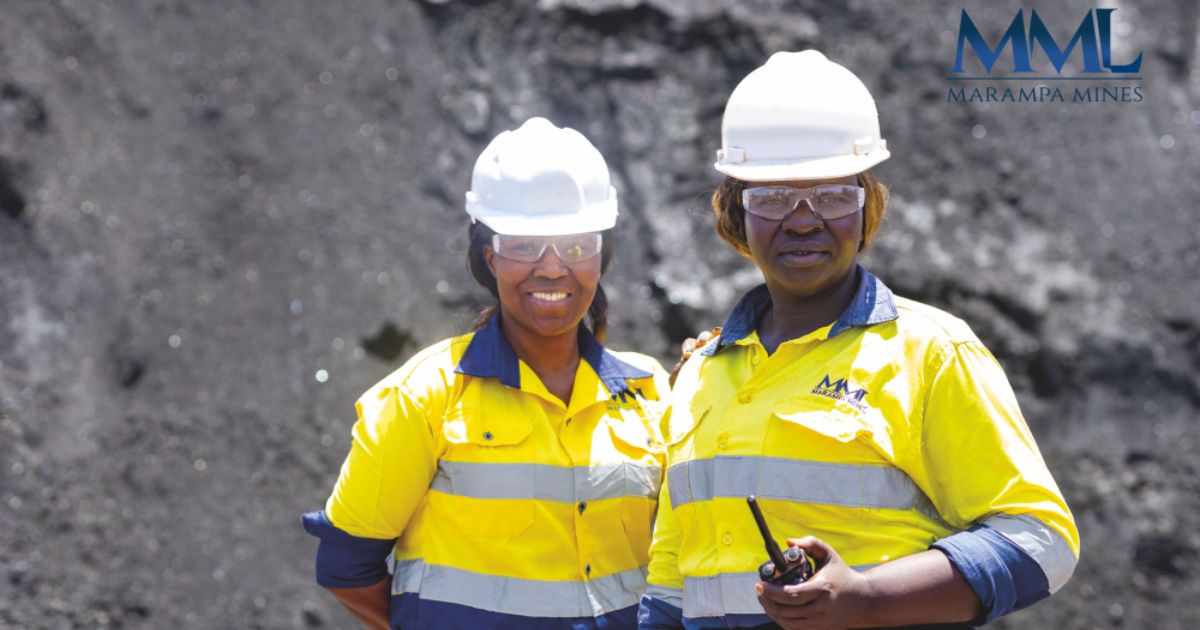
Marampa Mines Limited is reportedly preparing to cut about 925 jobs as the company restructures its operations amid challenges in the global iron ore market.

Reliable sources have told Sierraloaded that mining company, which employs about 4,200 workers, could reduce its workforce to approximately 3,275 employees.

The reported redundancy exercise is expected to affect mainly non-permanent staff, as well as some permanent employees.

The reported job cuts come after Marampa Mines announced a restructuring programme, which it calls the “Marampa Reset”, citing weak iron ore prices, high freight costs and operational challenges.

In a business update issued to staff on September 22, the company said its operations have also not yet achieved the consistency required to sustainably reach its targeted M3.75 production level at competitive costs.

Chief Executive Officer Paul Lombard and senior executive Angula Kalili described that the restructuring programme is aimed at stabilising the business, improving efficiency and aligning its cost structure with current market conditions.

“Before we can grow, we must first ensure the survival and stability of the business, improve our operational performance and achieve a sustainable M3.75,” management said.

According to the company, Marampa previously built its organisational structure and cost base around long-term expansion plans. It said the current market situation has forced a shift from expansion to sustainability, with the immediate priority being to protect the business.

The company said the restructuring would begin with senior leadership and expatriate positions before extending to the wider workforce, but did not publicly confirm the reported figure of 925 job losses in the statement cited.

Marampa Mines said employees affected by the restructuring would be informed through established procedures and that the process would be handled with “clarity, dignity and respect.”

The company also said it had been engaging the Government of Sierra Leone and other stakeholders over the financial challenges affecting the mine and measures needed to restore its competitiveness.

Meanwhile, the Ministry of Mines and Mineral Resources has held discussions with Marampa Mines on the company’s financial position and the future of its operations.

According to the ministry, the meeting reviewed the company’s financial health, the challenges affecting its operations and possible measures to strengthen its sustainability and continued contribution to Sierra Leone’s mining sector.

The government said the engagement reflects its commitment to maintaining dialogue with mining companies and addressing challenges affecting the sustainability of mining operations.


Source link

Bank of Sierra Leone Sign Agreement With FG Gold to Purchase Gold From Baomahun Mine


FG Gold Limited and the Bank of Sierra Leone have signed a Memorandum of Understanding for the central bank to purchase gold from the Baomahun Gold Project once commercial production begins.

The agreement establishes a framework for the Bank of Sierra Leone to buy gold produced at the large-scale mining project, with payments to be made in local currency, according to FG Gold.

The company said the arrangement represents the first offtake agreement between the central bank and a large-scale gold mine in Sierra Leone, creating a new channel for incorporating locally produced gold into the country’s reserves.

Baomahun, located in the southern part of Sierra Leone, is one of the country’s major mining investments. The National Minerals Agency lists FG Gold’s mining lease among Sierra Leone’s active mining agreements.

FG Gold said the project is valued at about $700 million and is expected to produce approximately 150,000 ounces of gold annually once operational.

The company said the planned purchases by BSL are intended to support the Bank’s Gold Purchasing Programme and strengthen the country’s gold reserves.

FG Gold Executive Chairman Oliver Tunde Andrews described the agreement as an important development for the company and Sierra Leone.

“We appreciate BSL’s confidence in us as a partner in its gold purchasing plan. This initiative will bolster Sierra Leone’s gold reserves and contribute to economic stability. We view this partnership as an opportunity to further strengthen the economy of Sierra Leone.”

The Bank of Sierra Leone has previously documented its plans to invest in gold and noted that the central bank has legal authority to buy and sell gold. Its financial statements also record the Board’s approval of a proposal for BSL investment in gold.

FG Gold said Baomahun is projected to contribute nearly 10% of Sierra Leone’s gross domestic product and create direct and indirect employment opportunities for up to 900 Sierra Leoneans. The company also said Sierra Leoneans already account for more than 90% of its workforce.

The company has undertaken several community and infrastructure initiatives ahead of production, including a tertiary education and skills-training fund, improvements to the 66-kilometer Matotoka access road, and projects aimed at strengthening trade and market connections.

FG Gold also cited the construction of St. Joseph Bakhita Primary School and the renovation of the Baomahun Health Centre among its community investments.

The company said major mine infrastructure, including a power plant, processing plant, tailings storage facility, accommodation camp and administrative buildings, is nearing completion.

The Ministry of Mines and Mineral Resources has previously described Baomahun as Sierra Leone’s first large-scale commercial gold mine, with a JORC-certified resource of 5.81 million ounces and expected annual production of 150,000 ounces over more than a decade.

The proposed gold purchasing arrangement comes as Sierra Leone seeks to expand the contribution of its mineral resources to national economic development and reserve management.


Source link

Chicken Town Sierra Leone Announces Price Adjustment Over Rising Commodity Costs


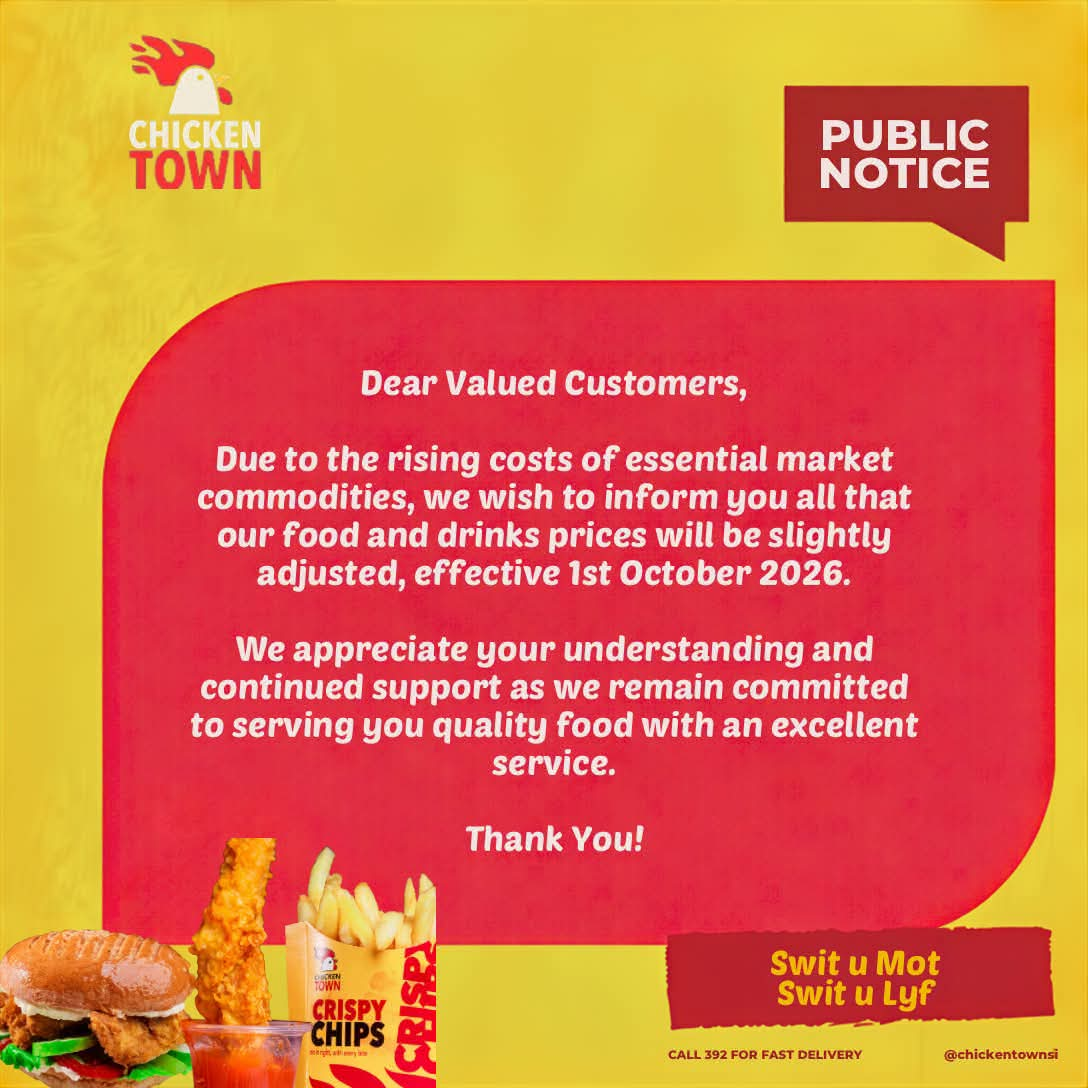
Chicken Town Sierra Leone has announced a slight increase in the prices of its food and drinks, effective Oct. 1, citing rising costs of essential market commodities.

In a customer notice, the food and beverage business said the adjustment is driven by continued increases in the cost of key ingredients and supplies used in its operations.

The new prices will take effect on Oct. 1, 2026. The company did not disclose specific percentage increases or a revised price list.

Management described the adjustment as modest, saying it reflects broader market pressures affecting food service businesses across the country.

Chicken Town Sierra Leone said it remains committed to maintaining quality food and service despite the price changes.

“We appreciate your understanding and continued support as we remain committed to serving you quality food and excellent service,” the notice stated.

Price adjustments among food vendors and restaurants have become common in urban areas of Sierra Leone, as businesses respond to fluctuations in commodity prices, transport costs, and supply chain pressures.


Source link

US$20 Million Financing Package Finalised to Boost Palm Oil Processing in Sierra Leone


Sierra Leone’s palm oil processing sector has received a major boost following the finalisation of a US$20 million financing package from Proparco, the French development finance institution, aimed at expanding the operations of Jolaks Manufacturing Company Limited.

The financing, Proparco’s first direct investment in Sierra Leone, was secured under the Africa Resilience Investment Accelerator (ARIA) initiative and is now being implemented, according to details of the agreement first signed in November 2024. The loan will support the expansion of Jolaks’ existing refinery capacity, the installation of a biomass power plant, and strengthened links with local smallholder farmers.

Jolaks, a subsidiary of the family-owned Pee Cee Holding Ltd, currently processes up to 300 tonnes of crude palm oil per day at its Freetown refinery, converting it into refined cooking oil sold under brands such as Padi, as well as soap and by-products. The company employs more than 400 people and already supplies the domestic market while exporting to several ECOWAS countries.

Proparco’s Regional Director for West Africa, Sadio Dicko, described Jolaks as a “key player for the Sierra Leonean population,” noting that the financing would enable the company to process more palm oil locally and secure the supply of this staple commodity. ARIA Country Manager for Sierra Leone, Valerie Entsiful, said the company’s objectives were “very clear, both in terms of food security and creating jobs for young people in Sierra Leone”.

Minister of Agriculture and Food Security Henry Musa Kpaka stated that Sierra Leone has transitioned from being a net importer of vegetable oil to a net exporter, with palm oil production growing “by at least 8% to 10% every year”. He highlighted the tangible household impact, noting that the company’s success allows families to send their children to school and access sufficient food.

For local smallholder farmers, the expansion represents a more reliable market for their produce. Cecilia Jimmy, a farmer who has supplied Jolaks since 2001, said the company “pays us a good price, so we always come back to them”. The increased capacity is expected to encourage higher production and reduce post-harvest losses that have historically plagued rural producers with limited market access.

The investment aligns with the government’s broader objectives of job creation, import substitution, and agricultural self-sufficiency. Minister of Trade and Industry Alpha Ibrahim Sesay noted the country’s commitment to attracting investment in agriculture and related sectors.

The Jolaks project is part of a wider push by the Pee Cee group, which also operates large-scale onion farming and processing in Lungi under the government’s Feed Salone initiative.

With increased local processing capacity, Jolaks is positioned to reduce Sierra Leone’s foreign-exchange leakage from vegetable oil imports while strengthening the link between rural farming communities and the national market.


Source link

Father-Daughter Duo From Sierra Leone Secure U.S. Patent for Groundbreaking Fractal Grid Invention


A U.S. patent application for a data-organising method called Fractal Gridding, filed by Sierra Leonean-born inventor Rodney Kuhn King and his daughter Ecy Femi King, remains pending before the United States Patent and Trademark Office, according to agency records. The application, published as US20240095226A1, describes “methods and related devices for storing and accessing data using multi-level fractal grids”.

The filing, submitted in September 2023, lists both Kings as inventors and claims priority to a provisional application filed in September 2022. Google Patents currently shows the application’s legal status as “Pending,” not granted.

The Fractal Grid is a visual tool that arranges information in a hierarchical, nine-cell grid structure designed to mirror how the brain organises data. Rodney King has described it as a “visual tool to organise information in a brain-friendly manner”. He first filed a related application for “Fractal Grid Hierarchical Presentation of Information” in 2007.

Rodney King attended the Prince of Wales School in Freetown, where he was Head Boy in 1976, and graduated from Fourah Bay College in 1980 with a civil engineering degree. He later earned a master’s in infrastructure planning from the University of Stuttgart and lectured at Bell College of Technology in Scotland before moving to the United States in 2003.

Ecy King, born in Scotland and raised in California, studied at Stanford University and is a fellow at Harvard’s Centre for Digital Thriving. She has authored three Fractal Grid comic books, including “Bit by Bit,” published by Stanford University Press.

The application’s publication has drawn attention in Sierra Leonean media, where the invention has been framed as a source of national pride. However, the USPTO has not yet issued a final decision on the patent’s claims.

Attempts to independently verify several biographical claims in recent media coverage—including the assertion that a Dr William Fitzjohn served as King’s lecturer at Fourah Bay College—were unsuccessful. Public records identify a William Henry Fitzjohn who taught at the college in the 1950s, decades before King’s enrollment.


Source link

QCell Launches New 035 Number Series to Expand Connectivity in Sierra Leone


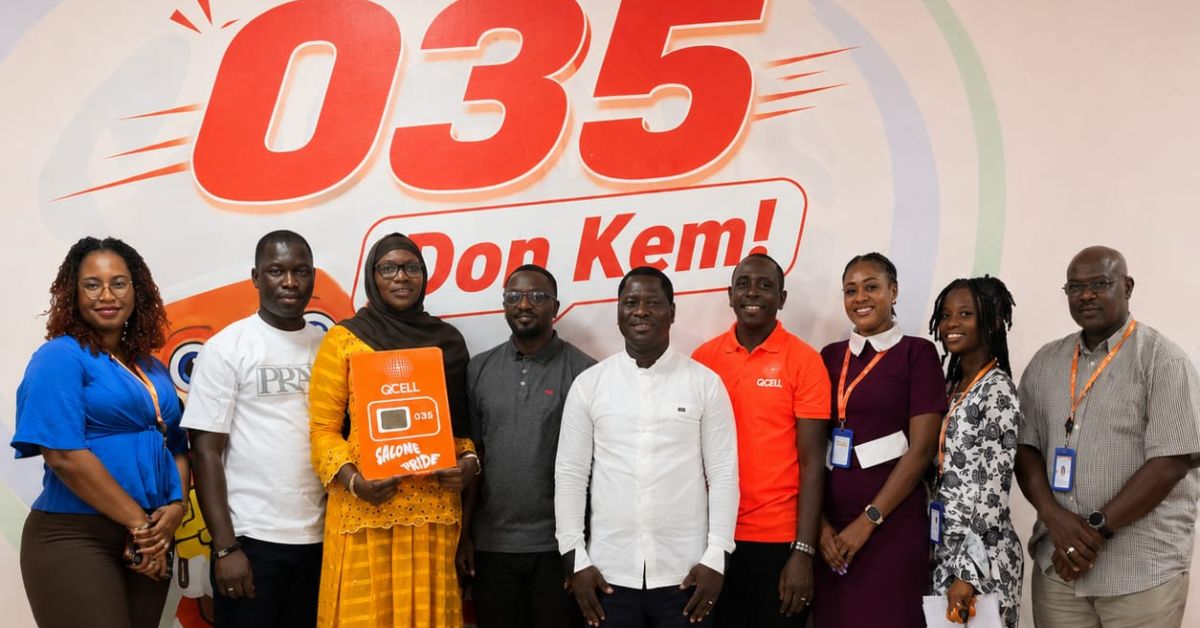
QCell mobile telecommunications network has launched a new 035 mobile number series at its headquarters in Freetown, introducing an initiative aimed at expanding customer choice and meeting the growing demand for telecommunications services across Sierra Leone.

The move comes as the company seeks to strengthen digital inclusion and enhance access to mobile connectivity in an increasingly technology-driven economy.

The launch includes a six-month promotional package for customers who activate the new 035 SIM cards, offering 10 minutes of voice calls, 300MB of data, and 100 SMS, designed to encourage adoption and improve user engagement with QCell’s network.

Speaking at the event, QCell Chief Executive Officer Karthik Jayamani said the new number series reflects the company’s commitment to innovation, adding that it allows customers to select numbers that align with their personal identity. Head of QMoney, Gabriel Mendy, highlighted the broader significance of the initiative, noting that it strengthens the integration between telecommunications services and mobile financial solutions, thereby supporting financial inclusion.

Head of Marketing Edward Nelson demonstrated the process of acquiring the new numbers, explaining that customers are required to present a valid national identification card for registration, in line with regulatory standards. Addressing concerns around security, Mendy emphasised that QMoney operates under strict Know Your Customer protocols and maintains a strong record of safeguarding users.

As the only African-owned telecommunications company in Sierra Leone, QCell has continued to expand its footprint in the country’s digital sector, including recent investments such as the rollout of 5G services in Freetown.

The introduction of the 035 series forms part of its broader strategy to scale operations and respond to increasing demand for reliable and accessible telecom services nationwide.


Source link

Oil Prices Drop By More Than 9% After US, Iran Pause Attacks


The price of oil has fallen sharply after the United States and Iran paused attacks, raising hopes that the conflict between the two countries may calm down.

Brent crude oil, which is used as a global price guide, fell by more than 9% after rising above $100 per barrel last week.

The drop happened after both countries announced that attacks had stopped temporarily to allow possible talks.

The conflict had caused oil prices to rise because of fears that oil supplies could be affected, especially through the Strait of Hormuz, an important route for transporting oil around the world.

Oil prices had earlier fallen after efforts to reduce the conflict, but they increased again when fighting restarted, and concerns about energy supplies grew.

By Monday, oil prices were still lower, but experts warned that the situation remains uncertain because the conflict could change at any time.

Analysts said countries are watching the situation closely because continued tensions could affect fuel prices and global energy supplies.


Source link

New Kent Dry Port to Reduce Cargo Pressure at Water Quay


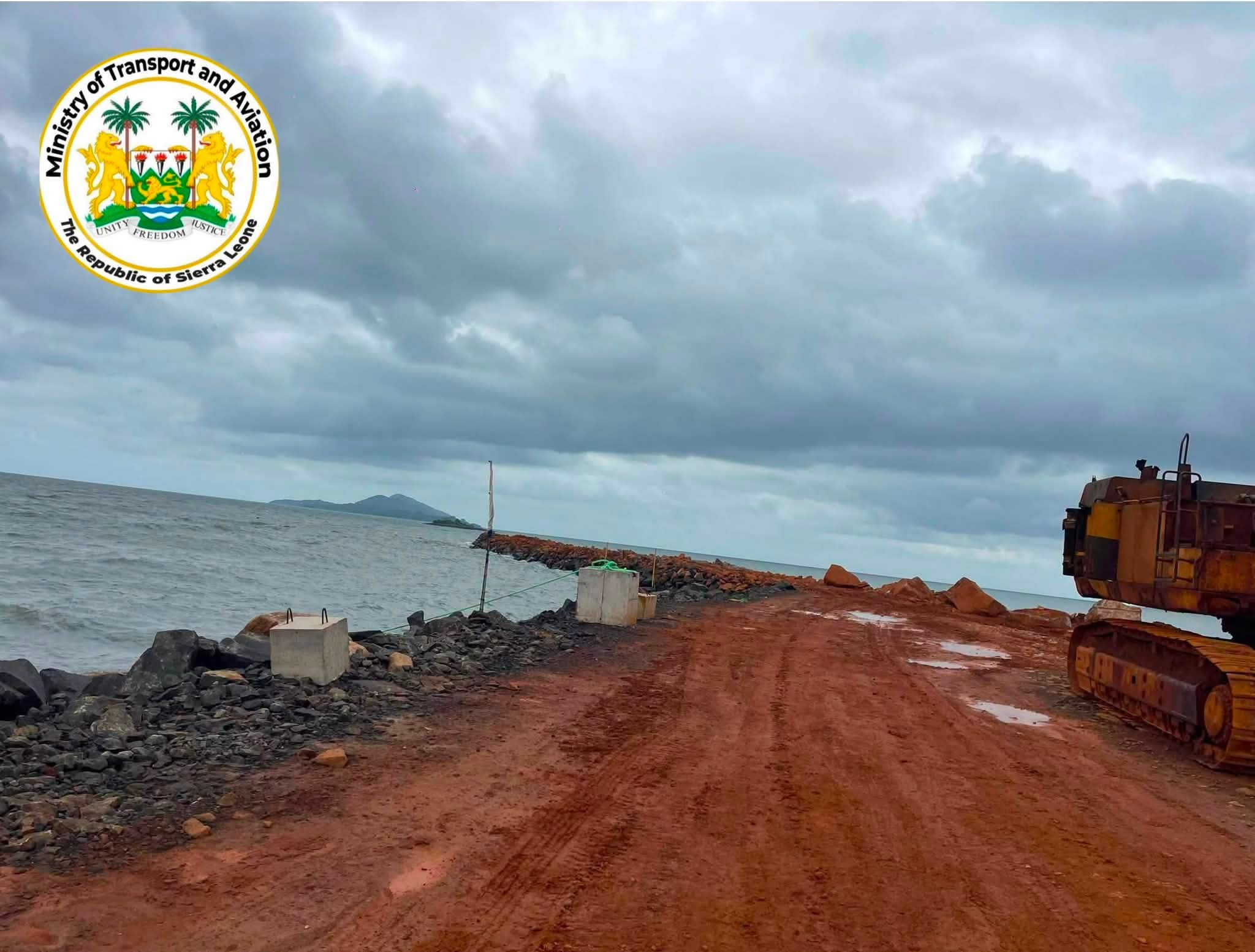
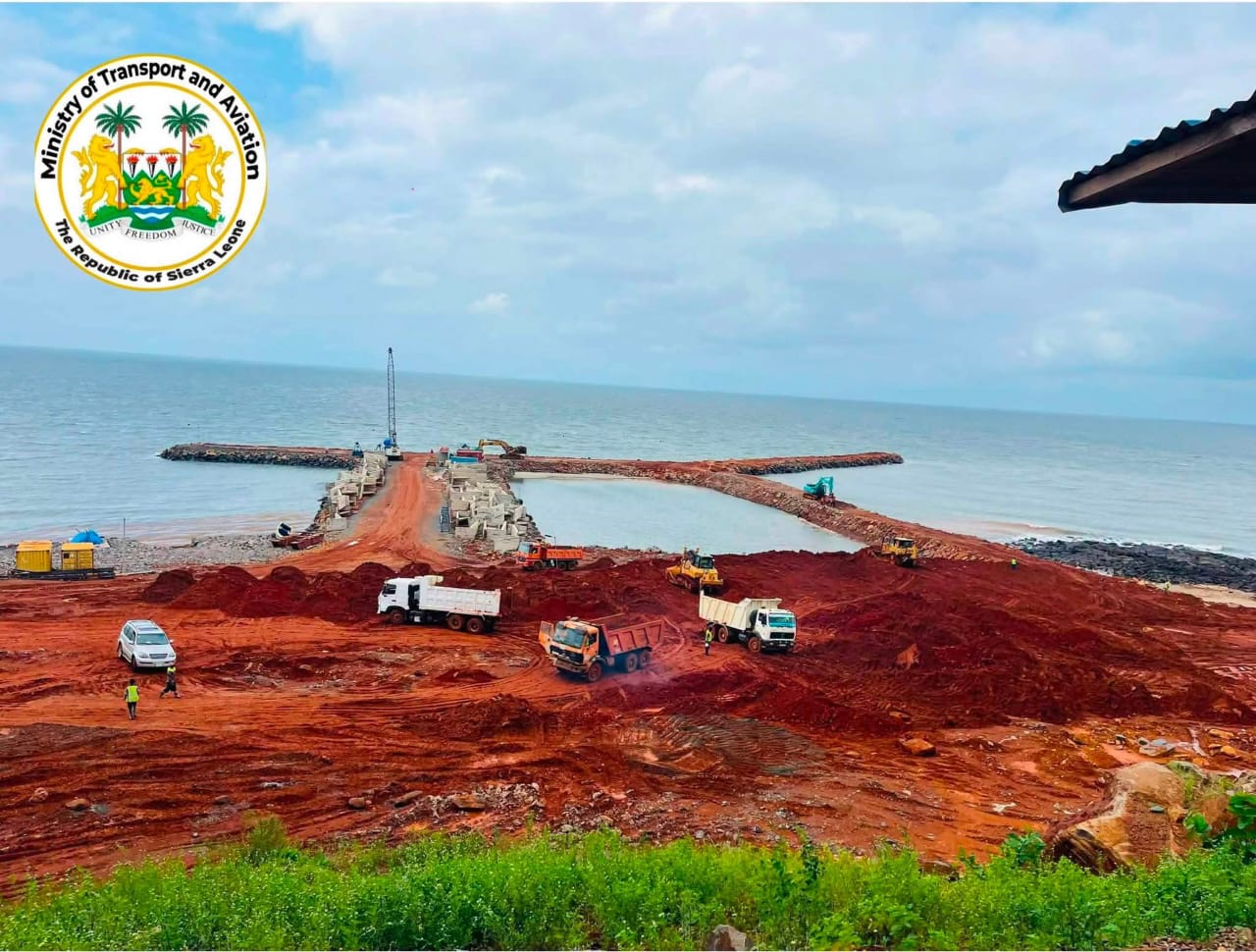
The development of a new dry port facility at Kent is expected to reduce cargo pressure at the Queen Elizabeth II Water Quay in Freetown. Constructed by Gento Group, the dry port will ease pressure on existing port facilities, and create new economic opportunities as the country expands its maritime infrastructure.

The project came under review on Saturday, 25 July 2026, when Chief Minister Dr. David Moinina Sengeh and Minister of Transport and Aviation Ambassador Col. (Rtd.) Alhaji Fanday Turay Esq. inspected the Gento Group’s Dry Port Project in Kent, Freetown.

The inspection highlighted the government’s continued focus on improving infrastructure through partnerships with private investors to support trade, transportation, and economic development.

During the visit, Chief Minister Sengeh described the project as a major step towards transforming Sierra Leone’s port and logistics landscape. He said the development reflects the government’s vision of turning investment commitments into practical projects that deliver national benefits.

He praised the collaboration between the government and Gento Group, noting that the project demonstrates growing confidence in Sierra Leone’s economy.

Gento Group Chief Executive Officer Mohamed Gento Kamara said the company’s operations are already providing employment opportunities, with more than 600 workers engaged, most of whom are Sierra Leoneans. He added that the company is working with technical partners while ensuring environmental standards are maintained.


The Kent Dry Port is expected to help reduce congestion at the Queen Elizabeth II Quay by providing additional space for cargo handling as trade volumes increase. Officials believe the facility will improve efficiency, lower business costs, and support economic growth.

Minister of Transport and Aviation Ambassador Col. (Rtd.) Alhaji Fanday Turay Esq. said the government remains committed to developing a modern transport system capable of supporting investment and strengthening Sierra Leone’s position within the regional maritime sector.

He noted that projects such as the Kent Dry Port, alongside other maritime initiatives, are part of wider efforts to create jobs, improve trade networks, and unlock the country’s economic potential.

The inspection reflects the government’s continued engagement with major infrastructure projects aimed at building a stronger and more competitive logistics sector for Sierra Leone.


Source link